The “Last Acre” Advantage: How Rural Connectivity Unlocks Smarter Irrigation and Water Management
If you work in irrigation — whether as a contractor, dealer, OEM, grower, superintendent, or municipal leader — you already know that water management isn’t just about infrastructure anymore. It’s about information. Real-time data, remote monitoring, and system automation have become the backbone of efficient water use. But here’s the reality: none of that works without connectivity.
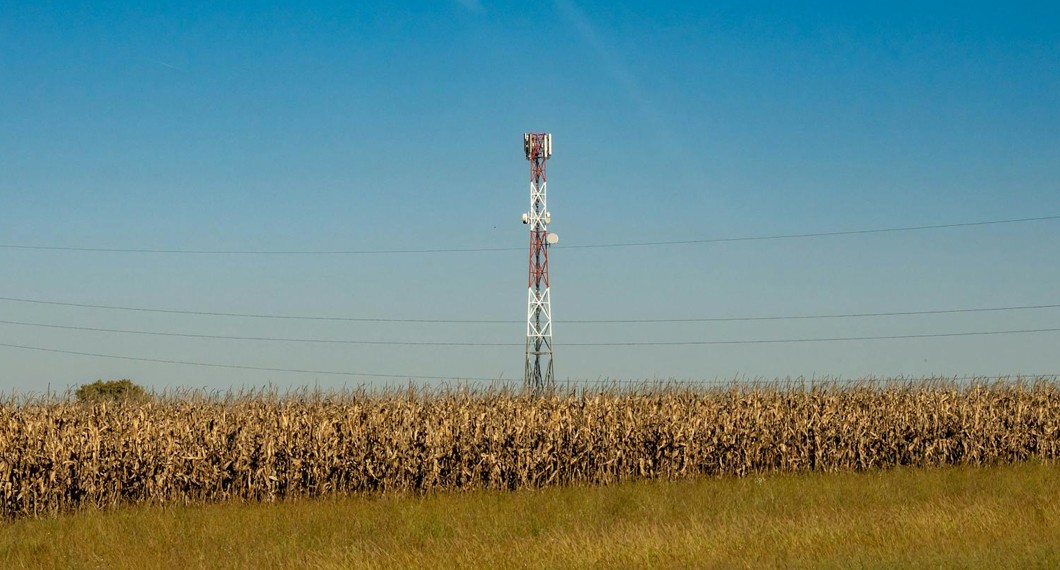
For decades, broadband conversations in rural America have focused on homes, schools, and small businesses — and those are critically important. But today’s agriculture and water systems run on digital tools too. A farm, a golf course, an orchard, or a community’s water district cannot fully optimize water usage if the last mile stops at the building and never reaches the last acre.
That’s why the LAST ACRE Act, active in the 119th Congress, deserves attention. It aims to expand broadband coverage across agricultural land—not just rural residences—so modern irrigation and water infrastructure can operate the way it was designed to.
This is where Paige plays an advocacy role that many don’t see: we sit at the intersection of irrigation, connectivity, and water stewardship. We understand the technical side of rural broadband and the operational realities of water management. And that gives us a unique perspective on what full-coverage connectivity really enables.
Why Connectivity On the Acre Matters
When your connectivity ends at the front gate, your irrigation system becomes reactive instead of proactive. The devices exist. The software exists. The sensors exist. But without network access, many of the most powerful features stay locked inside a controller. Here’s what reliable connectivity across farmland enables:
Precision irrigation that actually performs
Moisture sensors, flow meters, soil temperature monitors, and weather-driven cycle adjustments only deliver value when they can communicate consistently. The more acres you irrigate, the more critical that real-time link becomes.
AMI and municipal water infrastructure that reduce waste
Cities and water districts are investing heavily in smart meters, automated alerts, and leak-detection technology. Connectivity across open land—ditches, easements, pumping stations, outlying zones—allows these systems to report anomalies instantly rather than react after damage is done.
Operational efficiency for irrigation contractors
Contractors waste time (and fuel) driving site-to-site to confirm issues that smart systems could have alerted them to instantly. Better connectivity means fewer emergency callouts, more preventative maintenance, and better service to growers and superintendents.
Reduced water waste and stronger sustainability outcomes
When data can flow freely, irrigation scheduling becomes more accurate and more aligned with actual crop demand or landscape needs.
Where Paige Shows Up in the Policy Work
Our team stays close to legislation like the LAST ACRE Act because connectivity is no longer optional—it’s essential infrastructure for water stewardship. Rural broadband expansion isn’t just a telecom issue; it’s an irrigation issue, an ag issue, and a municipal water issue.
We advocate for:
Broadband policies that consider acres, not just addresses
Standards that support open, interoperable devices for irrigation control
Better alignment between water policy and connectivity policy
Practical deployment models that don’t leave contractors or growers holding the complexity
Smart irrigation cannot scale if connectivity stops short of the fields where it’s needed most. And we’re committed to making sure decision-makers understand that.
The Bottom Line
Water management is entering a new era—one that relies not just on pumps, valves, and wire, but on continuous, reliable digital connectivity. The LAST ACRE Act recognizes this shift, and it’s encouraging to see federal policy finally acknowledge what our industry has known for years: if we want smarter irrigation, smarter conservation, and smarter municipal water systems, we must connect the entire landscape—not just the living room.
And as always, our role at Paige is simple:
Bridge the gap. Clarify the technology. Champion the industry.
Because the future of irrigation runs on data—and data can’t flow if the connection ends too soon.
